We had breakfast at Forth cafe on Jetty Rd Glenelg. Our food was good, but our coffees were awful. I left half of mine, but Bluey didn’t mind his taster. Anita caught a tram to the city to visit the Adelaide Central Market, while Bluey and I explored Glenelg.
The beach here is still off leash all day, so I took Bluey for a run near the jetty, but there were no other dogs for him to play with.

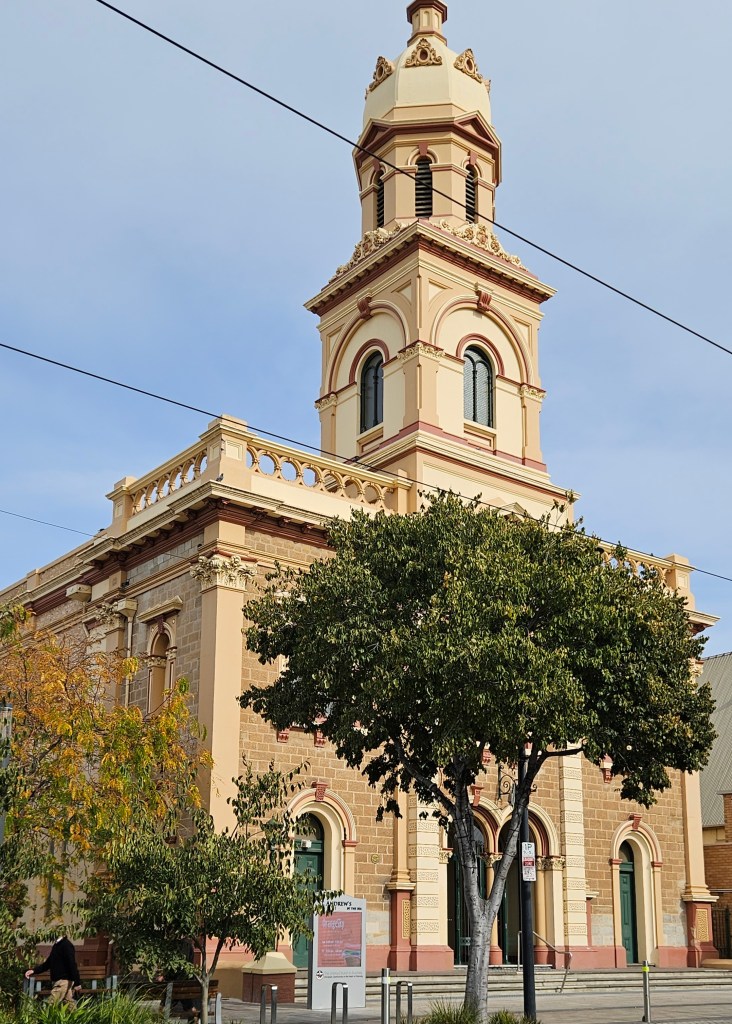
My interest was in the many historic buildings in Glenelg, from the grand Town Hall and St Andrews by the Sea Uniting Church, to privately owned mansions and smaller homes.

This Georgian mansion at number 14 S Esplanade was a stand-out. It is called Stormont and was built in 1886 for grazier, Simon Barnard, but he lost his home in a poker game to his neighbour William Pile, who owned Albert Hall at 16 S Esplanade.
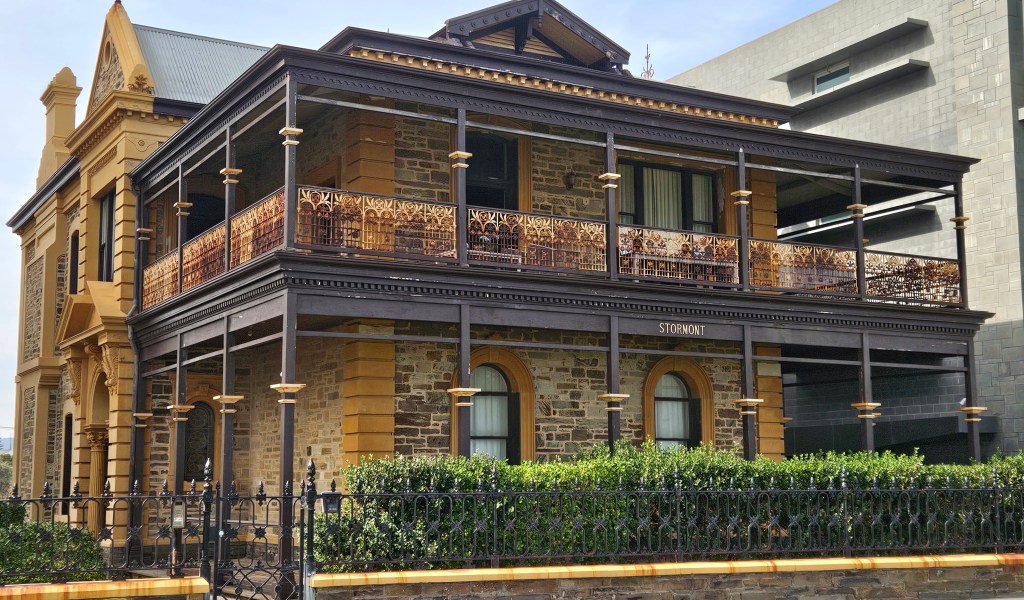
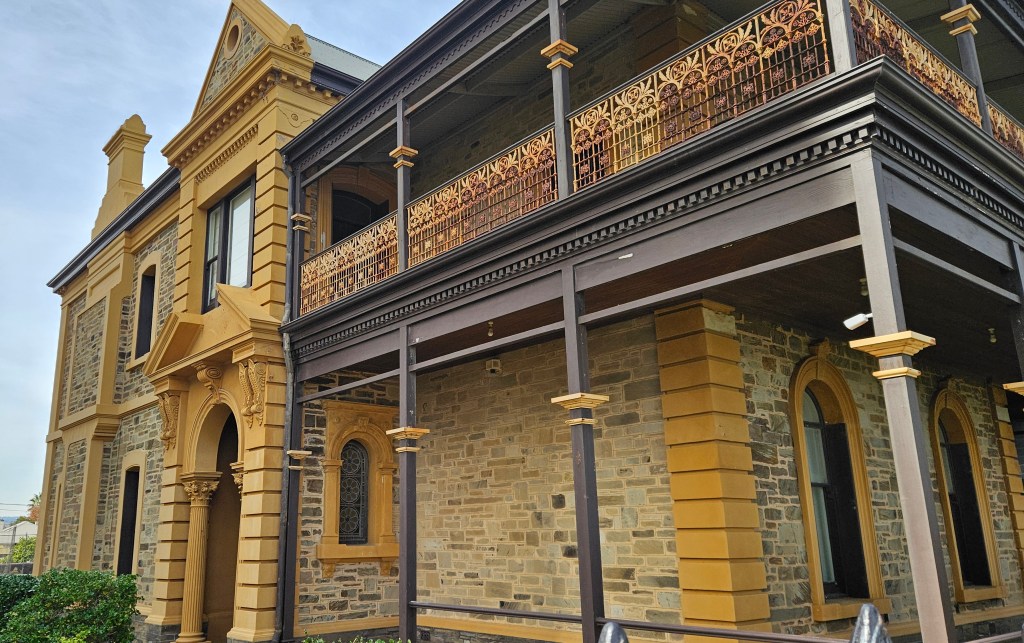
Albert Hall has 20 rooms over three stories. It became the Oriental Private Hotel in 1930, and in 1982 was used as backpacker accommodation. In the 1990s it was restored as a private residence, but is now divided into three apartments. It is a very ornate building.
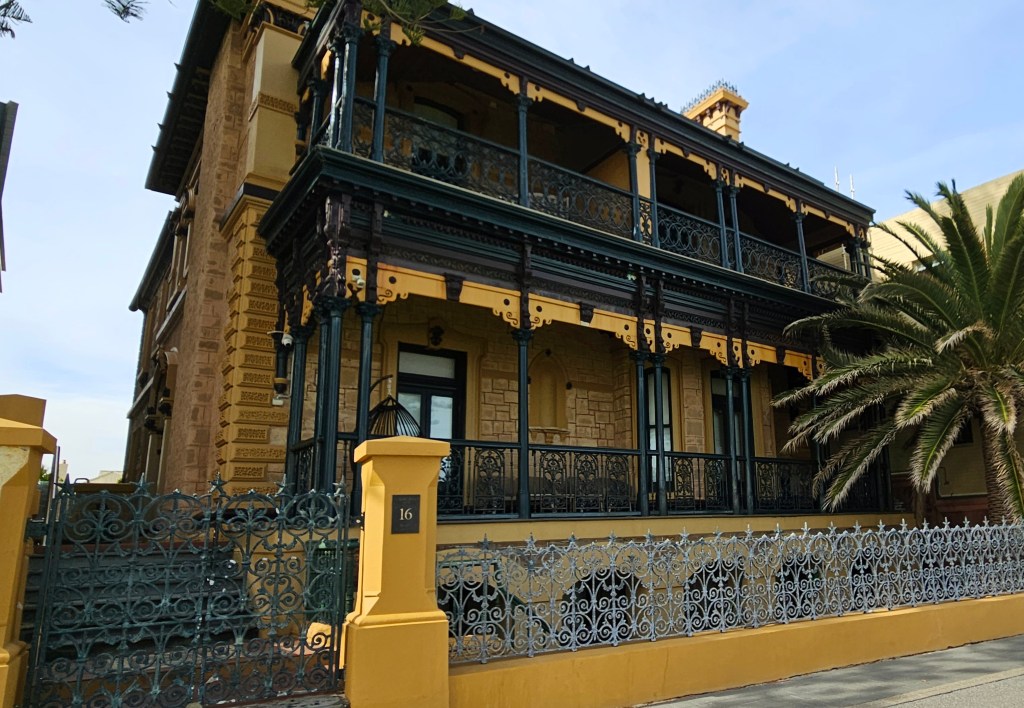
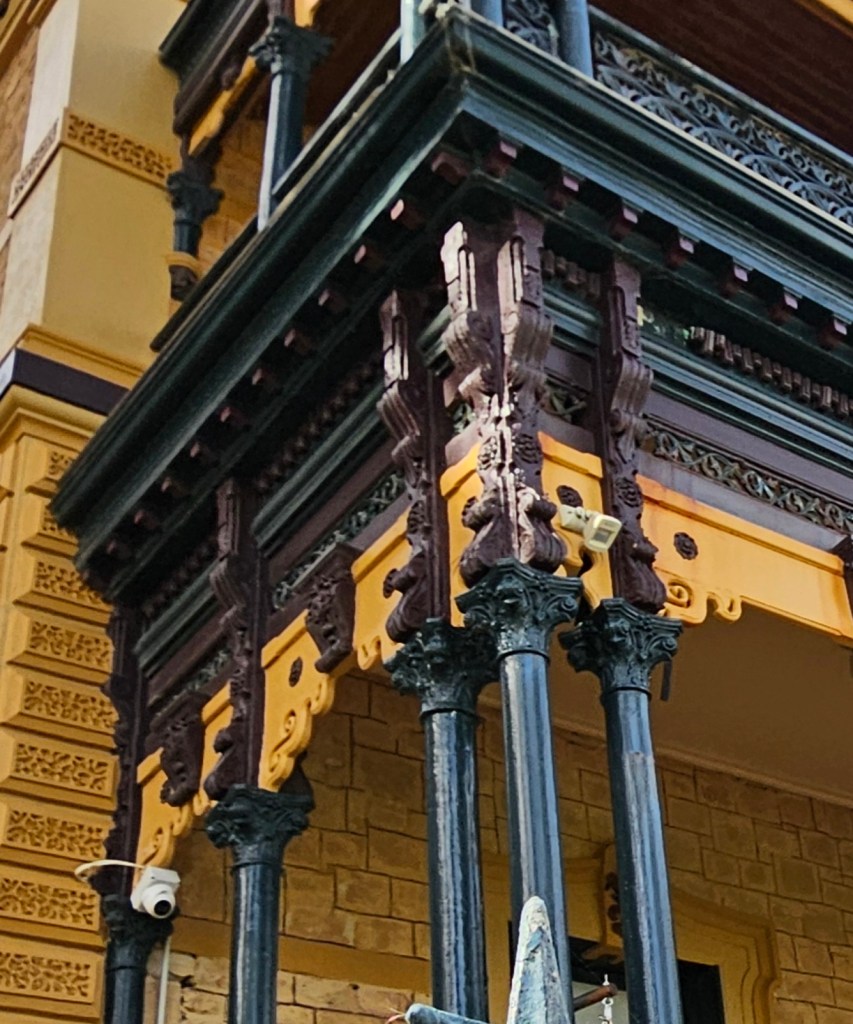
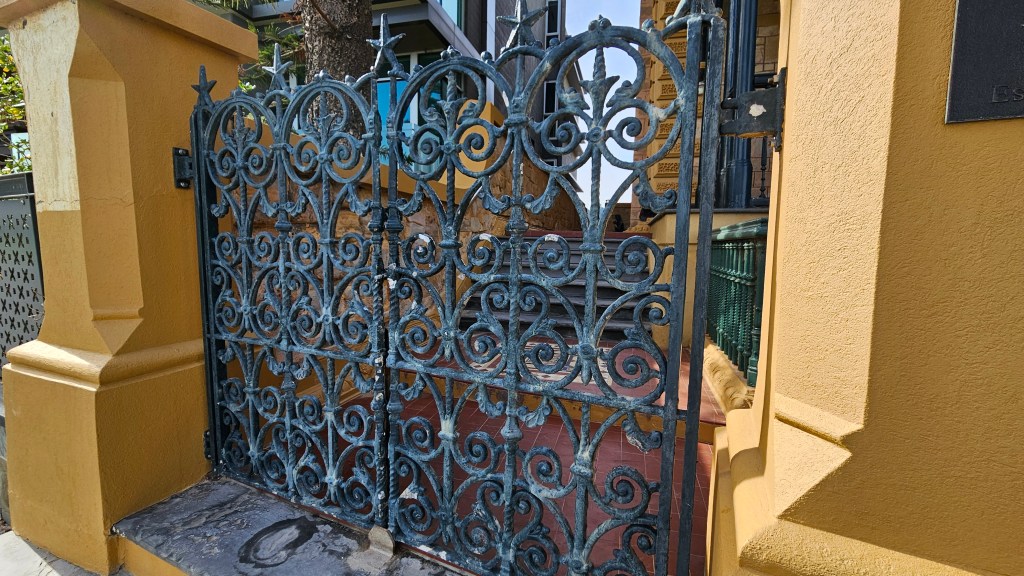
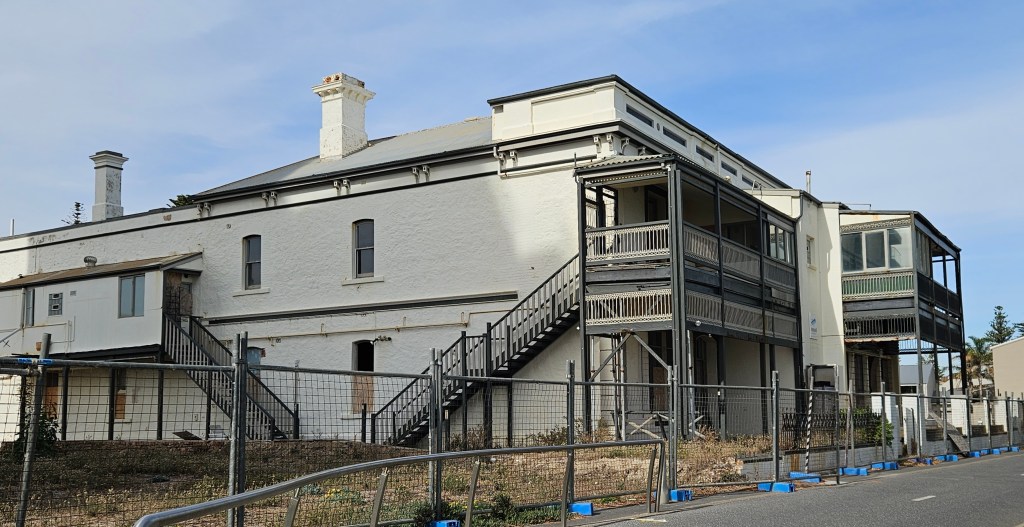
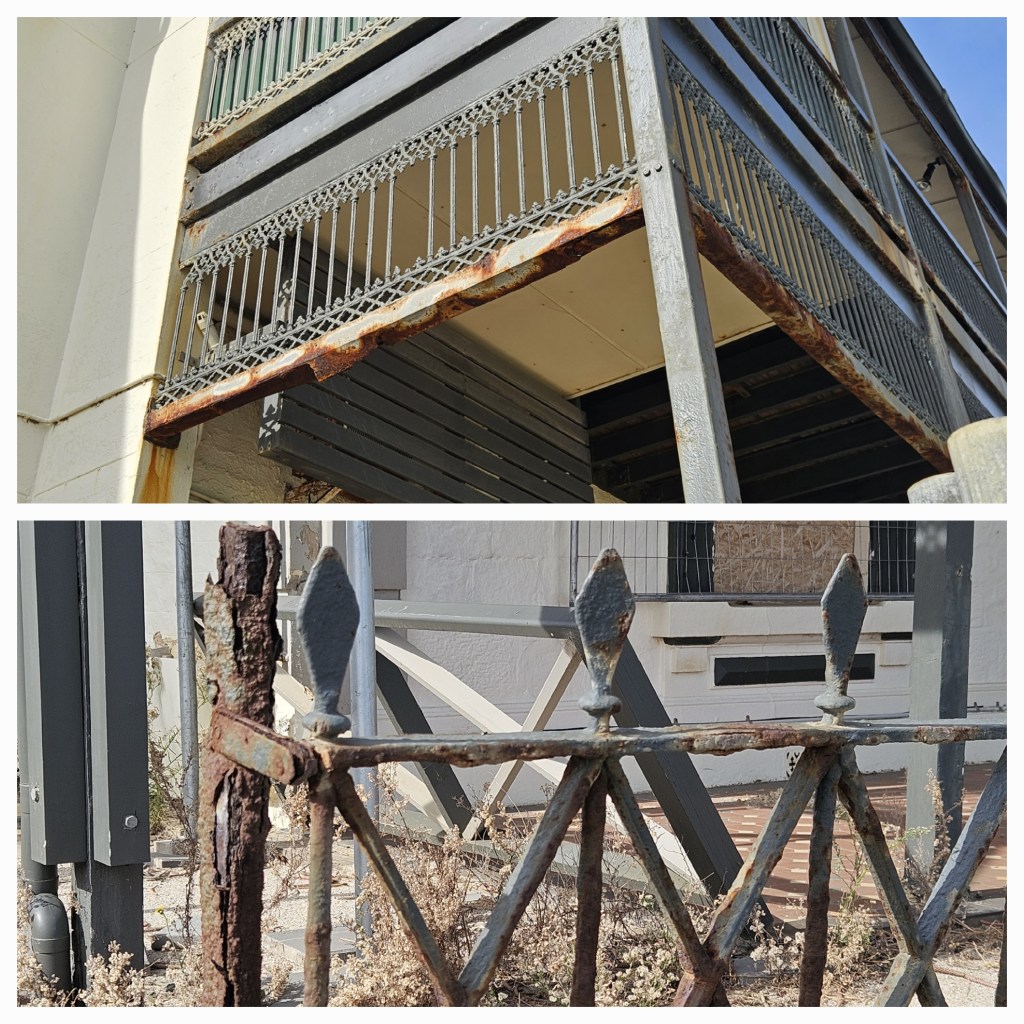
Further along the Esplanade, these two buildings will need extensive and expensive renovations if they are to be saved. A second application to build a 10 storey apartment block and demolish the Seawall Apartments has been rejected.
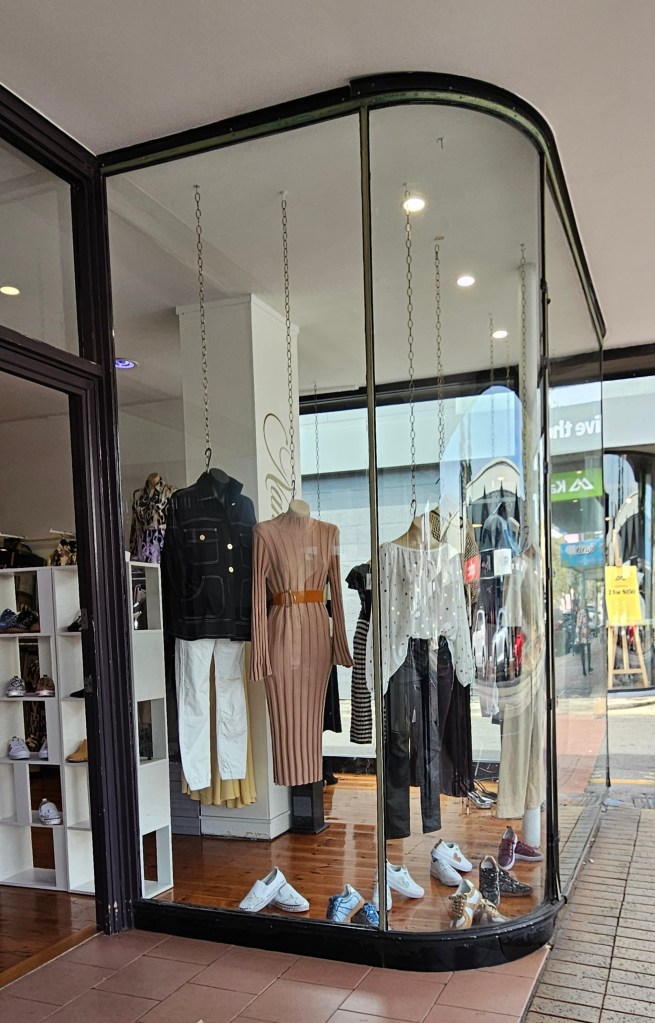
Shoreham is an elegant three storey apartment block in the classic 1930 Art Deco style. The curves contrast with the angular lines of the new apartment blocks each side. I spotted two other buildings with curved walls, and a couple of shops with their original curved glass front windows, which are very expensive to replace if broken.


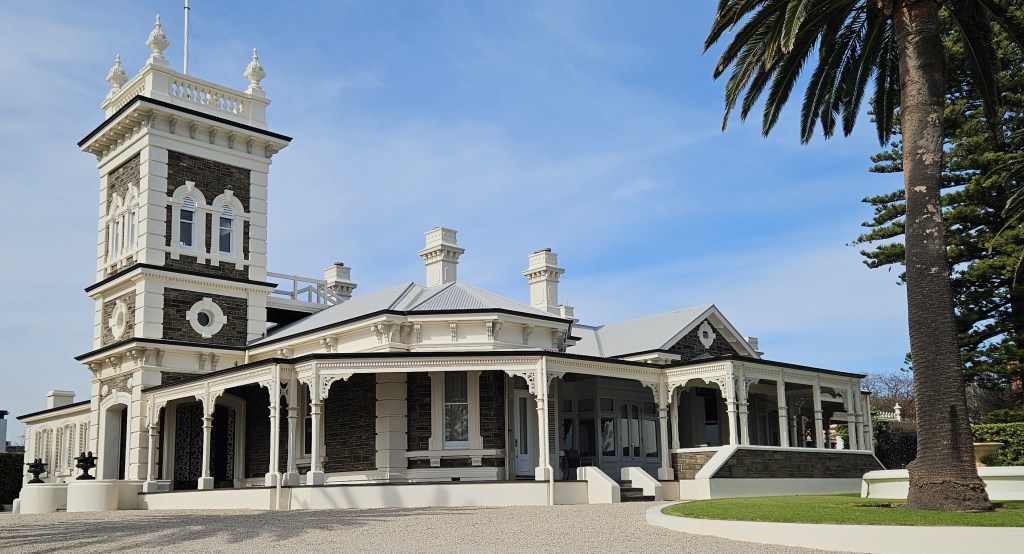
My favourite building along the Esplanade is Glenara, an 1873 Italianate structure that has been beautifully restored.

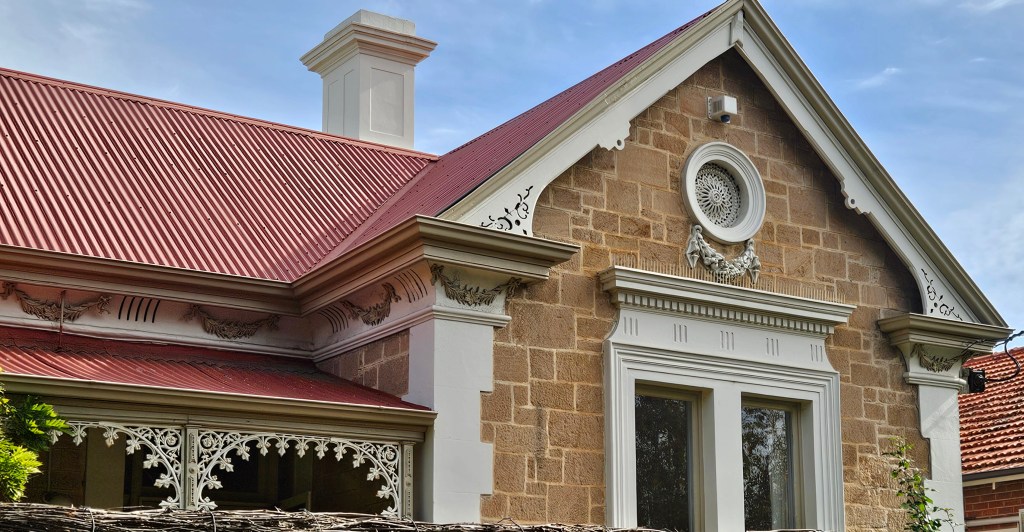
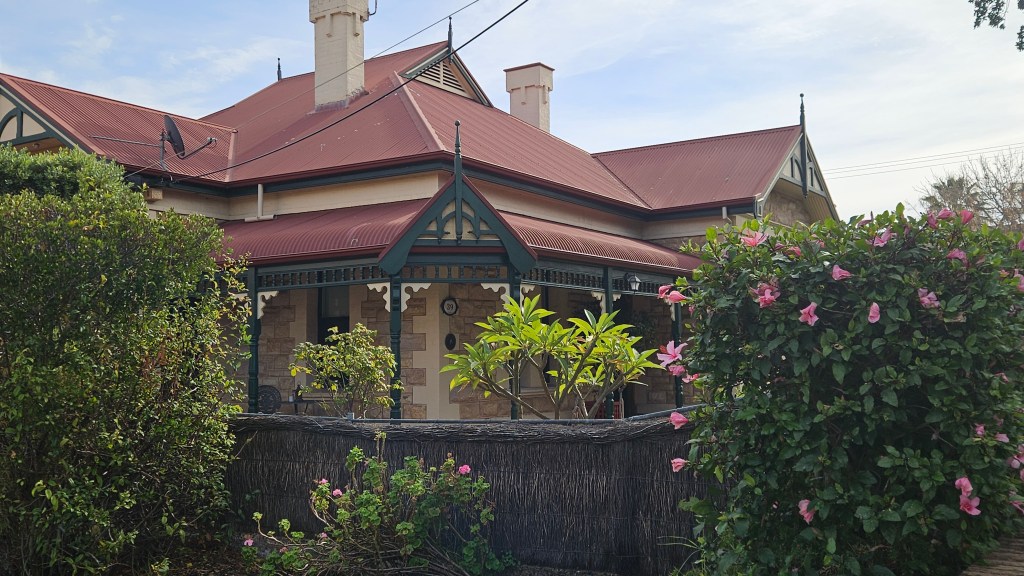
In the residential streets behind the Esplanade, surviving historic homes range from Georgian, Victorian, and Federation styles, to Californian bungalows. Sometimes I could only see part of the building because of high fences.

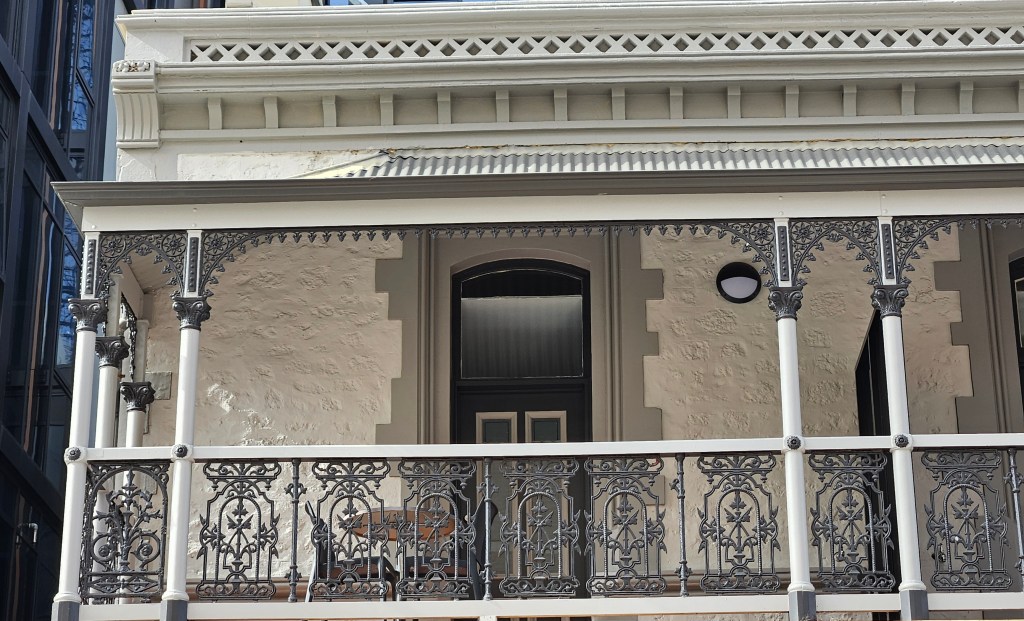


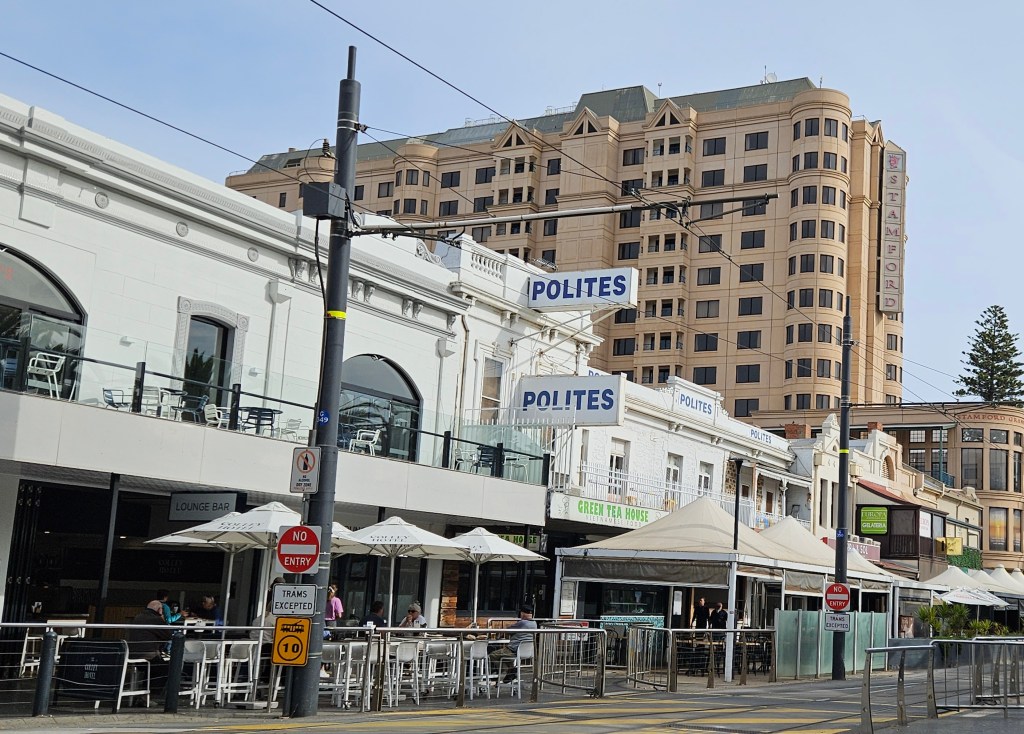
Jetty Road Glenelg still has many historic buildings, but most have been “modernised” in a way that detracts from the original architectural style. The 1911 State heritage listed former post office is lost behind signs and road fencing, and is now used as a yiros house selling fish and chips. The former Savings Bank of SA is a real estate office with prominent advertising.


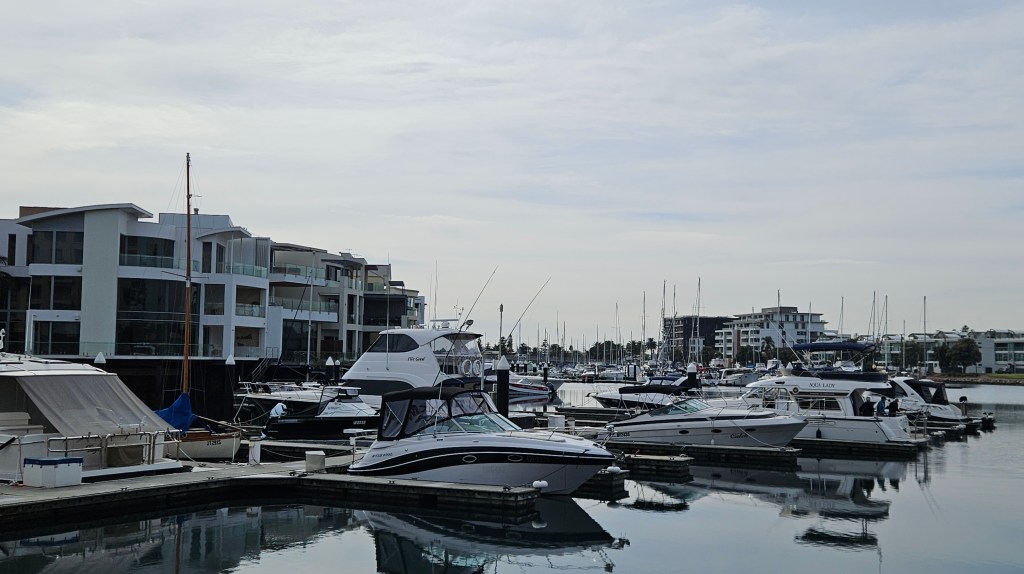
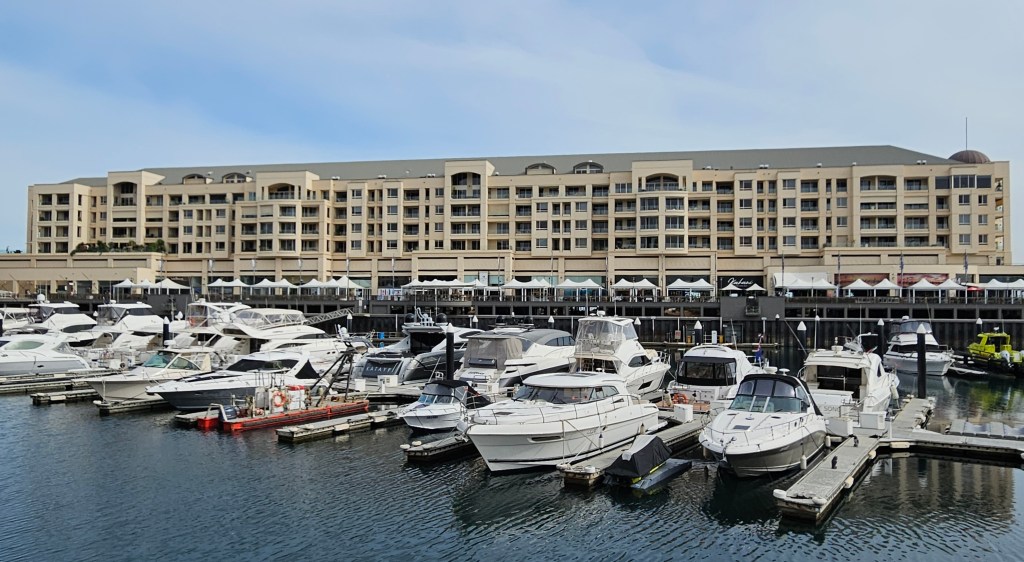
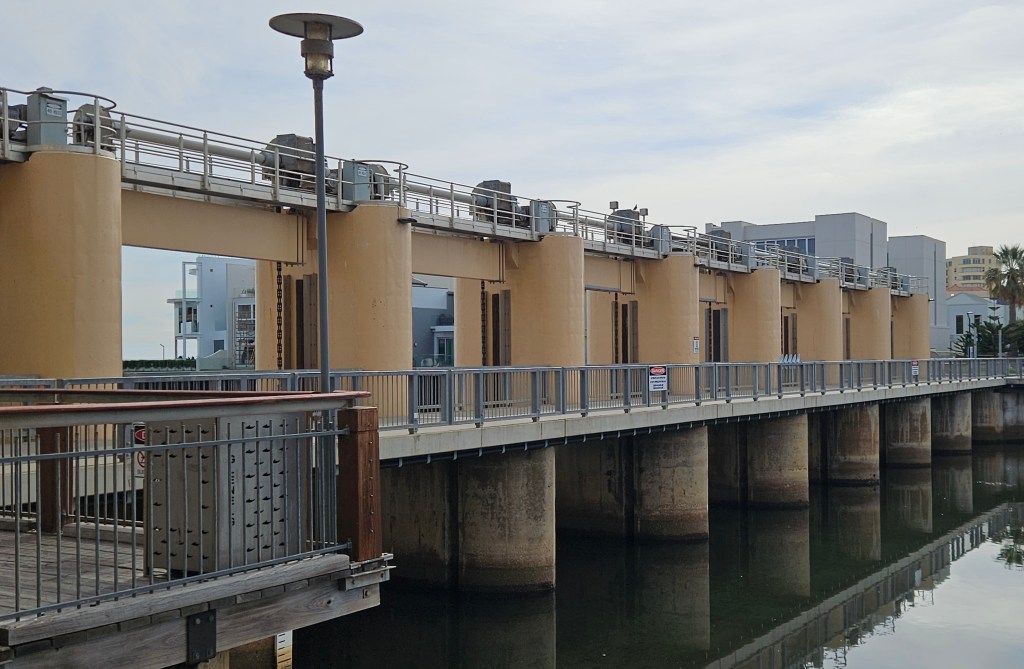
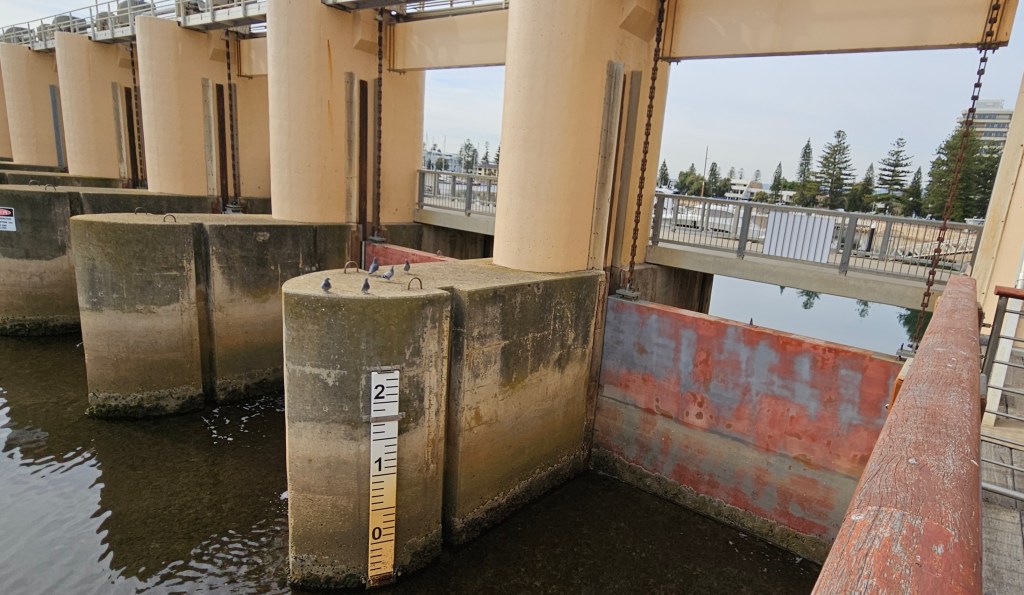
To the north of Jetty Road is the Patawalonga Boat Haven. There is a series of gates designed to stop floodwater from damaging surrounding buildings, but in 2003 the gates were kept closed, presumably to protect the boats, causing flooding of 150 buildings. The rusty gates are to be replaced with stainless steel versions that should last 50 years without a lot of maintenance.
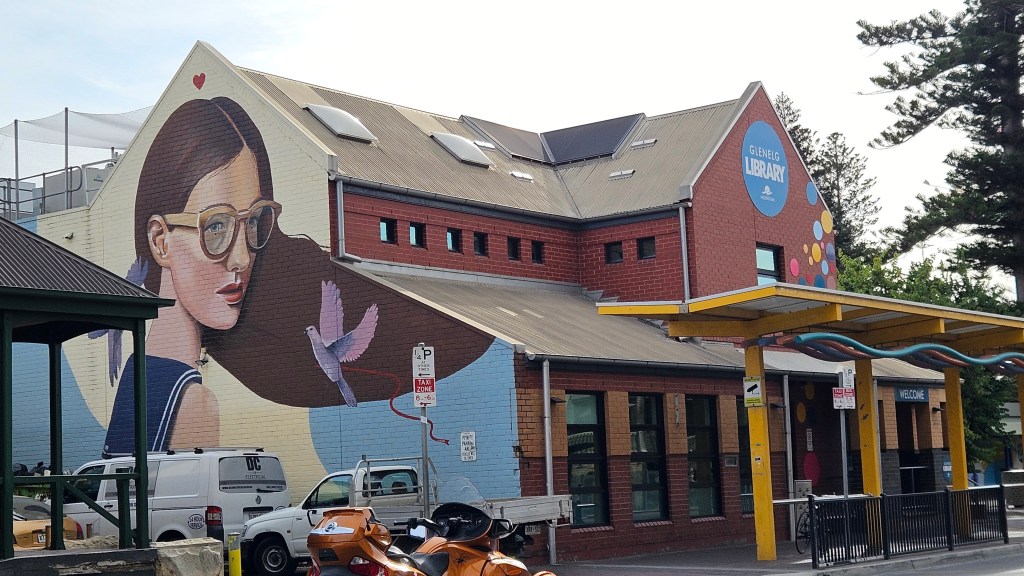
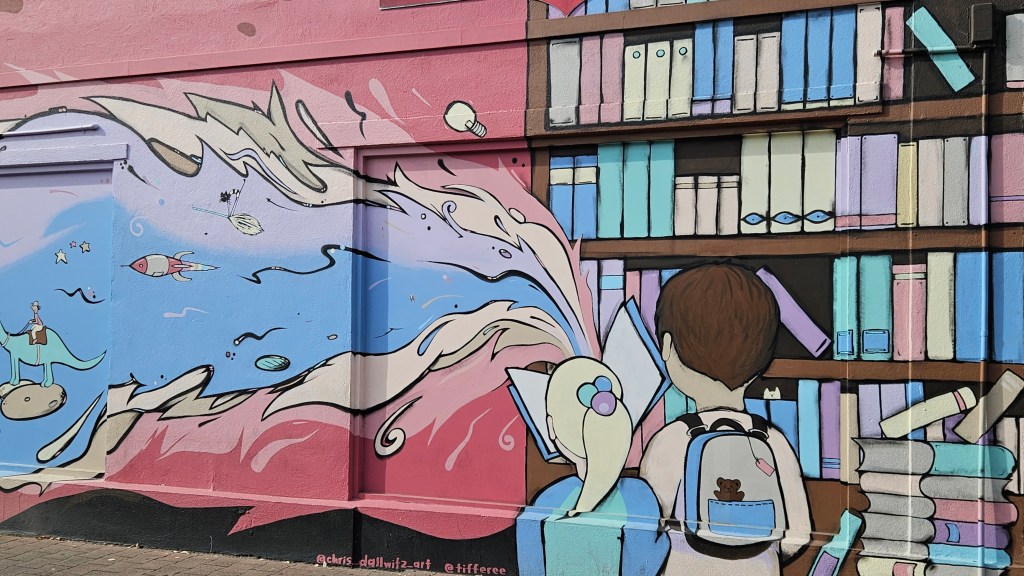
The Glenelg Library and Dymocks book store both have large murals.
We met Anita when she arrived back on the tram and drove back to Brighton, refuelling on the way. Tilly was very glad to see us! I took her for a long walk, interrupted by the many pats she gets along the way.
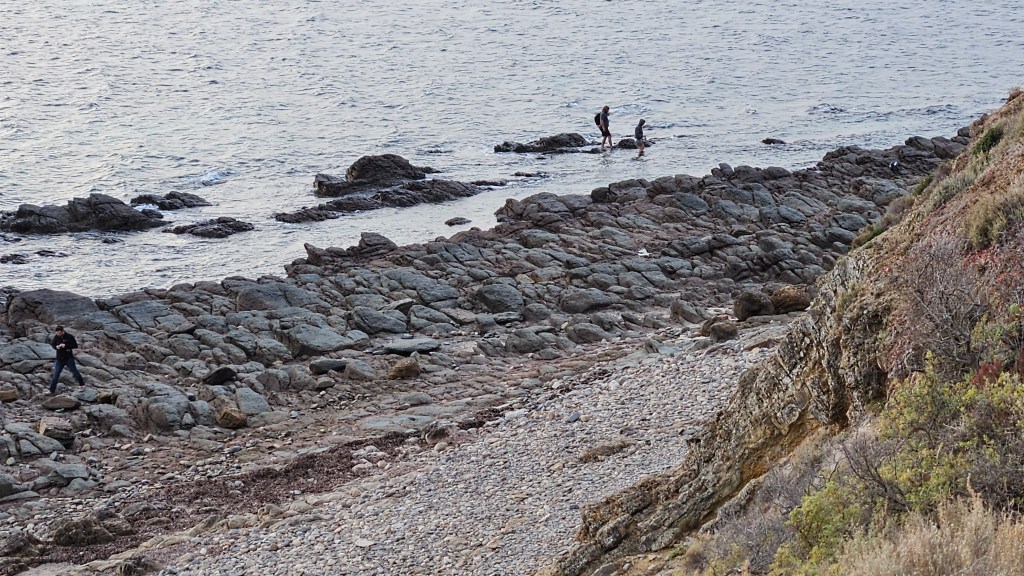
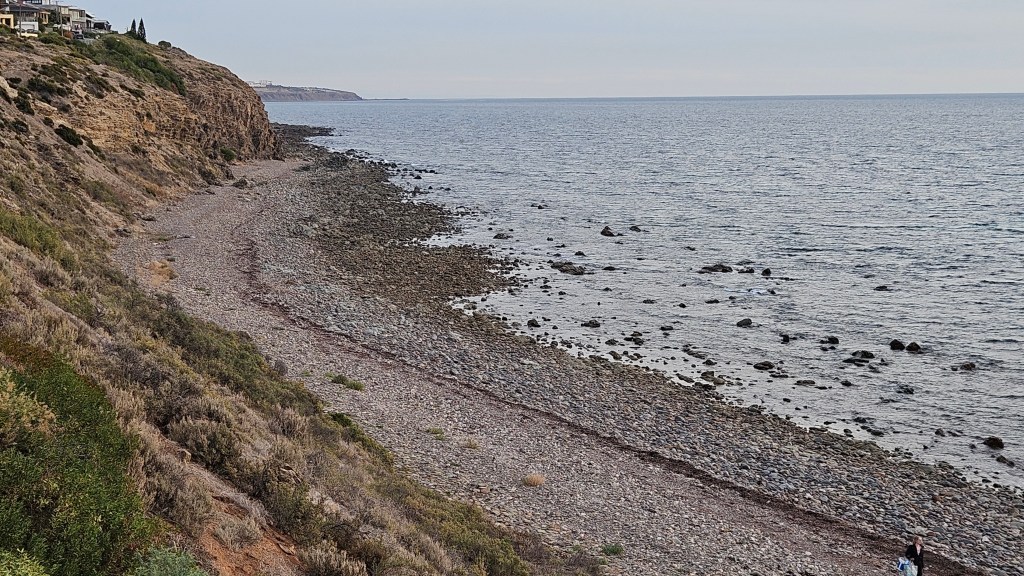
We decided to try the Marino Rocks Restaurant for dinner as it was only a 4 minute drive south of our caravan park. The landscape changes dramatically from long flat beaches to a cliff with rocks at the waters edge. Dinner was edible but not brilliant. I brought home two chicken satay sticks for the critters. Anita was convinced they wouldn’t eat satay flavoured chicken, but they both ate everything!

 Committed Travellers